



Compute
Powerful digital infrastructure to build what will shape the future
Public Cloud, Private Cloud e Virtual Data Center (VDC) em uma plataforma que vai redefinir sua experiência com infraestrutura sob demanda.
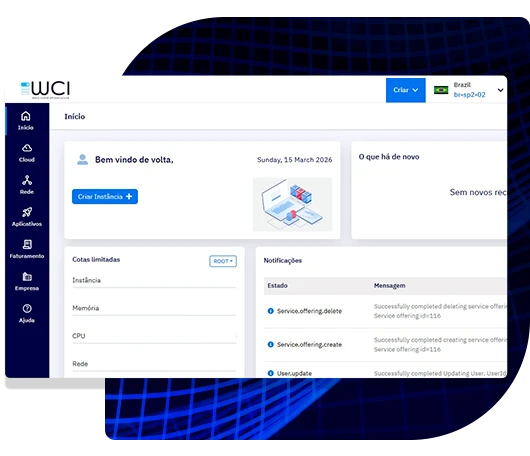
Why is WCI different from everything you know?

Costs in local currency, with no FX exposure

Soberania de dados com governança total

Data sovereignty with full governance
Architecture and workloads:
- Containers
- ERPs
- Databases
- Analytics
- Artificial Intelligence

WCI is Wevy’s cloud infrastructure platform
Designed to support critical applications, data, and innovation with predictability and control, WCI allows companies to run compute, storage, and networking on demand, adjusting resources as applications grow.
The platform makes it possible to structure environments in Public Cloud, Private Cloud, or Virtual Data Center, combining elasticity, sovereignty, control, and predictability for different workloads.
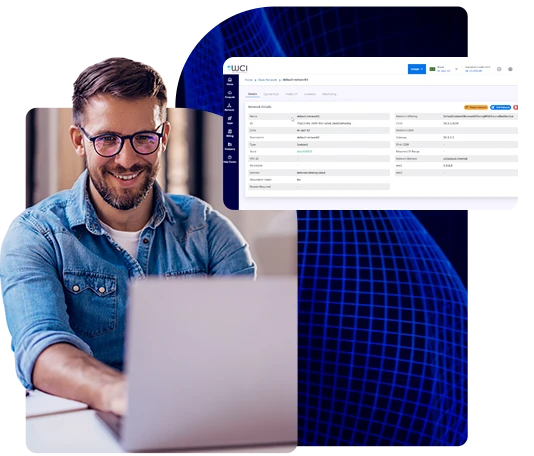

Public Cloud
Elasticity and speed for modern applications
- On-demand scalability for compute, networking, and storage
- Fast provisioning of environments and virtual machines
- Costs in local currency, with no exposure to exchange-rate fluctuations
- Ideal for web applications, APIs, and cloud-native workloads
- Resources built for data, analytics, and artificial intelligence

Private Cloud
Dedicated environments with governance and predictability
- Dedicated infrastructure for enterprise applications and sensitive data
- Greater control over architecture, security, and performance
- Ideal for critical workloads and mission-critical systems
- Architecture designed for regulatory and compliance requirements
- Operational predictability for long-term environments

Virtual Data Center (VDC)
Full control over networking, compute, and storage
- Virtualized infrastructure that replicates the logic of a complete data center
- Management of virtual machines, networks, and storage volumes
- Network segmentation and configurable security policies
- Snapshots and backups for data protection and continuity
- Ideal for migration or modernization of traditional data centers
The right infrastructure does not adapt to the decision
it is born from the right decision
The difference is not only in what WCI delivers, but especially in what it eliminates. Discover it.
Infrastructure built for modern workloads
— the ones you use today and the ones you will need tomorrow

Flexible virtual machines
Instance families built for different workloads, from test environments to critical applications.
Networking and connectivity
Control of virtual networks, traffic segmentation, and secure connectivity configuration.
Scalable storage
Configurable storage volumes for applications, databases, and operational data.
High availability
Load balancing, auto scaling, and monitoring to keep applications always available.
Containers and Kubernetes
Environments built for modern container-based applications.
WCI is the best option for companies that:
- Treat infrastructure as a strategic asset
- Seek financial predictability, with costs in local currency
- Value operational autonomy to create, manage, scale, and monitor infrastructure resources in a unified dashboard
- Value control over where data is stored
- Moving beyond the “endless project” and starting continuous data operations is a priority
Investing in robust, reliable infrastructure is also a way of looking to the future.
The experience of those who have seen the future change more than once
Wevy is the first Latin American multinational in cloud computing.

Compute
Digital infrastructure that delivers autonomy and predictability

Software Cloud Modernization
Software modernization platform with no refactoring
Managed Services
Monitoring, support, and sustainment for critical infrastructures

Data & AI - AI no-code
Custom dashboards and enterprise apps built from simple prompts
FAQ
Frequently Asked Questions
What is cloud infrastructure (cloud computing) and how does it work?
Cloud infrastructure, or cloud computing, is a model in which IT resources such as compute, storage, and networking are delivered over the internet on demand. Instead of buying and maintaining physical servers in their own data center, companies use virtualized infrastructure and pay only for the resources they consume. In WCI, this infrastructure is delivered as a service, allowing companies to create virtual machines, networks, storage volumes, and databases in a fast, scalable, and secure way.
In WCI (Wevy Cloud Infrastructure), this infrastructure is delivered as a service, allowing you to create virtual machines, networks, storage volumes, and databases quickly, scalably, and securely.
What is the difference between Public Cloud, Private Cloud, and Virtual Data Center?
These three models represent different ways of structuring cloud infrastructure:
- Public Cloud uses shared, highly scalable resources, ideal for digital applications, APIs, and workloads with variable demand.
- Private Cloud offers dedicated environments with greater security control, governance, and predictability for enterprise applications and sensitive data.
- Virtual Data Center (VDC) reproduces the structure of a complete data center in a virtual environment, allowing full control over networking, compute, and storage without the need for physical infrastructure.
In WCI, these models can be used independently or combined, depending on the needs of each workload.
What is Infrastructure as a Service (IaaS)?
Infrastructure as a Service (IaaS) is a cloud computing model in which companies use infrastructure resources — such as virtual machines, storage, and networking — without having to invest in their own hardware. With IaaS, companies consume infrastructure on demand and adjust capacity according to application needs. This reduces upfront investment in data centers and increases flexibility to grow or adapt the architecture.
WCI operates as an IaaS platform, enabling companies to run complete cloud infrastructure environments with scalability and governance.
How does data sovereignty work in cloud infrastructure?
Data sovereignty refers to control over where data is stored and under which jurisdictions and policies it is managed. In corporate environments, this is especially important for companies that handle sensitive data, need to meet regulatory requirements, or want greater control over their infrastructure.
With WCI, environments can be structured to ensure greater control over data location and governance, helping companies balance cloud flexibility with security and compliance requirements.
How much does cloud infrastructure (cloud computing) cost?
The cost of cloud infrastructure depends on several factors, such as the number of virtual machines, storage capacity, network usage, and the level of availability required by the applications.
In cloud computing models, resources are consumed on demand. This means the company pays only for the actual use of compute, storage, and networking, and can adjust capacity as applications grow.
In WCI (Wevy Cloud Infrastructure), the pricing model follows this consumption-based logic, but with one important difference: the infrastructure is billed in local currency, avoiding exposure to exchange-rate fluctuations that are common in international cloud platforms.
In addition, the WCI management dashboard makes it possible to track consumption, analyze usage trends, and forecast infrastructure costs over time, bringing more financial predictability to the operation.
Blog
Everything you need to know...

DataOps has emerged as a modern and strategic...

From an operational support role to an essential...

From on-premises equipment to cloud solutions, IT infrastructure...

When technology works well, almost no one notices....
Newsletter
Unique insights
From those who have seen the future change more than once
Receive exclusive content about cloud, AI, and digital transformation directly in your corporate email.
